
Spiti Valley in Winter: Route, Temperature, Snow & a 7-Day Group Trip Plan (2026–27)
Winter Spiti (December to February) means frozen rivers, snow-covered villages and nights down to –20°C. The only open route is via Shimla and Kinnaur. Temperatures, what is open, a 7-day plan, costs and packing, from a team that runs winter Spiti group trips.
Researched by travellers, fact-checked against multiple sources · last checked 25 Nov 2026. How we work
Quick answer
- Season: mid-December to February is “winter Spiti”: snow on the ground, frozen streams, very few tourists
- Route: only via Shimla → Kinnaur → Nako → Tabo → Kaza. The Manali side (Atal Tunnel, Kunzum Pass) is closed by snow
- Temperature in Kaza: about –5 to 2°C in the day, –15 to –25°C at night in January
- Altitude: Kaza is about 3,800 m; Komic and Langza are above 4,300 m
- Closed in winter: Chandratal Lake, Kunzum Pass, most hotels in Kaza. Homestays with wood or dung-fired heaters stay open
- Permit: none for Indian citizens. Foreign nationals need an Inner Line Permit for the Kinnaur–Spiti border stretch
- Trip length: 7–8 days from Delhi or Chandigarh
- Last checked: November 2026
Spiti in winter is a different valley from the busy summer circuit. The rivers freeze into blue-white ribbons, villages sit under a metre of snow, and you share the road with army trucks and the odd yak. It is also hard: bitter cold, frozen pipes and long drives. We run winter Spiti group departures every season, and this guide is what we tell our own travellers before they sign up.
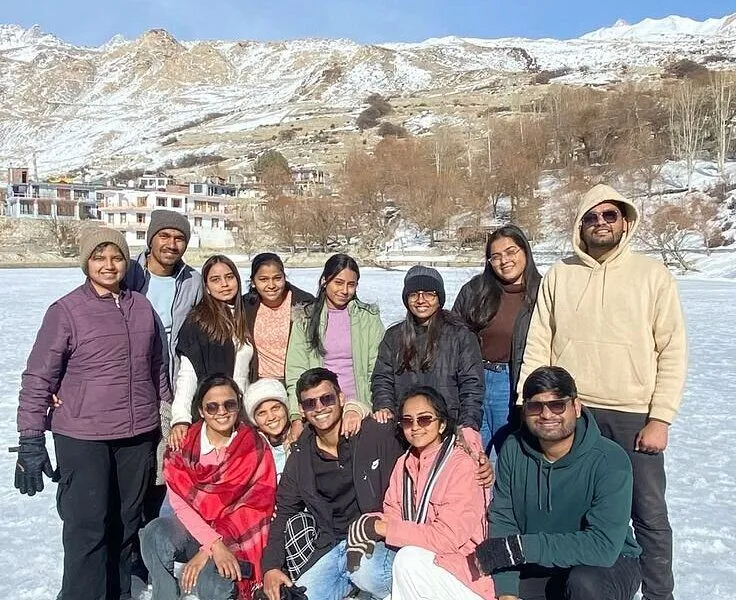 A Trip On Trail winter group in Spiti: snow on the ground, blue skies, freezing air.
Can you visit Spiti in winter?
Yes. Spiti is reachable all winter through Kinnaur, on the Hindustan–Tibet road (NH5) from Shimla. The road is kept open by the Border Roads Organisation, though fresh snowfall can close stretches near Nako and Malling for a day or two. What you cannot do in winter is enter or leave by the Manali side: Kunzum Pass is closed from about November to May, and the road from the Atal Tunnel to Losar is not maintained for tourists in winter.
Spiti weather and temperature in winter
| Month | Kaza day (°C) | Kaza night (°C) | What to expect |
|---|---|---|---|
| November | 3 to 8 | –8 to –12 | Dry, cold, first snow; Kunzum closes |
| December | –2 to 4 | –12 to –20 | Snowfall begins in earnest; streams start freezing |
| January | –5 to 2 | –15 to –25 | The coldest month; frozen rivers; deep snow |
| February | –3 to 4 | –12 to –20 | Heavy snow spells; good snow leopard season |
| March | 2 to 8 | –8 to –12 | Thaw begins; roads muddy in places |
These are typical figures from past winters. Wind chill makes it feel colder, especially at Komic, Langza and Key.
The winter route: Shimla to Kaza through Kinnaur
Delhi / Chandigarh → Shimla → Narkanda → Rampur → Sarahan or Sangla/Kalpa → Reckong Peo → Nako → Tabo → Kaza
- Shimla to Kalpa or Sangla: a long first day, mostly below the snow line. Kinnaur’s apple country and the Sutlej gorge.
- Kalpa to Nako: the road gets dramatic after Pooh, with the famous rock overhangs cut into the cliffs above the river.
- Nako to Tabo to Kaza: the landscape turns into high desert. Snow becomes likely from here on.
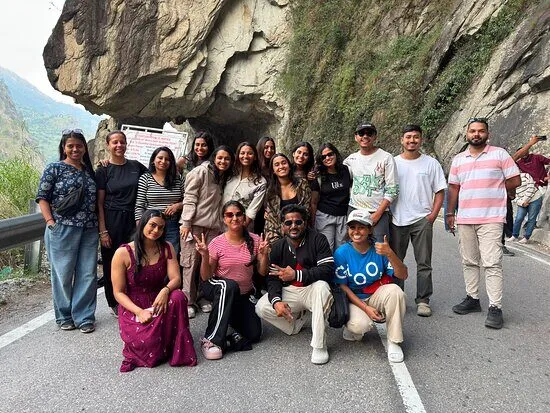 One of our groups on the road to Spiti, where the highway is cut into the cliffs.
A 7-day winter Spiti plan
Day 1: Delhi or Chandigarh → Shimla / Narkanda. Overnight drive or a day drive; sleep in Shimla or Narkanda.
Day 2: Narkanda → Kalpa or Sangla. Follow the Sutlej into Kinnaur. Kalpa has a famous view of the Kinner Kailash range at sunrise.
Day 3: Kalpa → Nako. Stop at Khab, where the Spiti and Sutlej rivers meet. Nako Lake is often frozen in January.
Day 4: Nako → Tabo → Kaza. Visit Tabo Monastery, founded in 996 CE and one of the oldest continuously working monasteries in the Himalaya. Reach Kaza by evening.
Day 5: Langza, Hikkim and Komic. Langza’s giant Buddha statue looks over the valley; Hikkim has one of the highest post offices in the world; Komic is among the highest motorable villages in Asia. All three are deep in snow in winter.
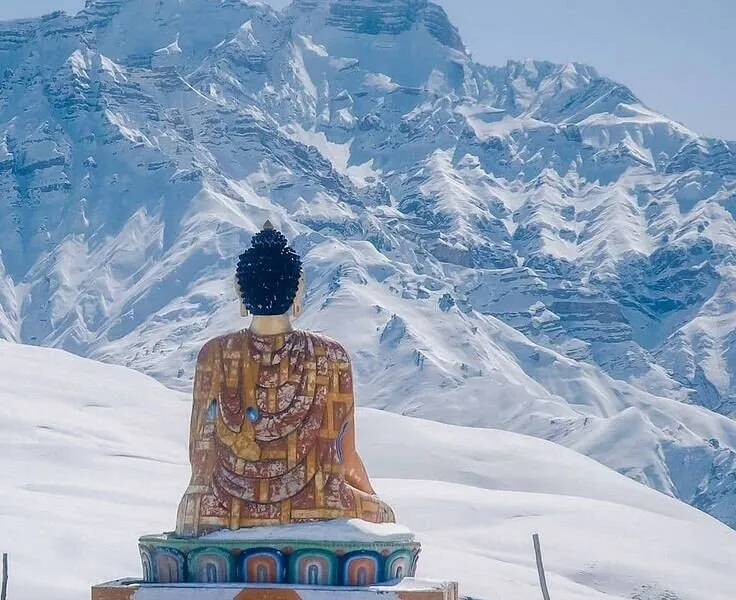 The Buddha statue at Langza, about 4,400 m, in winter.
Day 6: Key Monastery, Kibber and Chicham Bridge. Key Monastery against the snow is the postcard shot of winter Spiti. Kibber is the base for snow leopard spotting with local trackers from January to March.
Day 7: Kaza → Kalpa or Rampur. Start the long drive back, splitting it over two days if you can.
Add a day for weather. Snow can hold you in Kaza or Nako for a day, and a buffer day is the single best thing you can add to a winter itinerary.
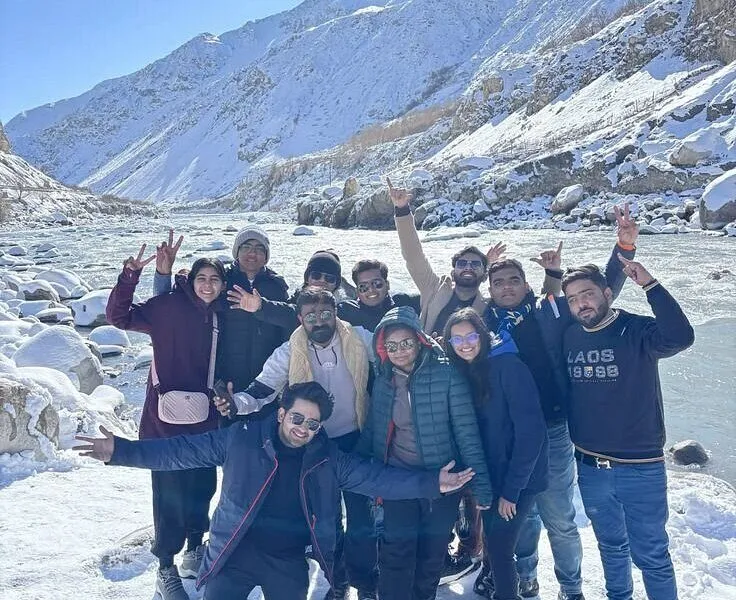 A frozen-river stop on a Trip On Trail winter trip.
What is open and what is closed in winter
Open
- Tabo, Key, Dhankar and Kungri monasteries (timings shorten; ask locally)
- Homestays in Kaza, Langza, Kibber, Tabo and Nako
- A few cafes and the market in Kaza (limited hours)
- Petrol pump in Kaza (fill up whenever you can)
Closed or impractical
- Chandratal Lake and Kunzum Pass
- Most hotels in Kaza (many owners move down for the winter)
- Pin Valley and Mud can be cut off after heavy snow
- ATMs are unreliable. Carry enough cash for the whole trip
- Mobile networks: BSNL and Jio work in Kaza and some villages; expect long gaps on the road
Where you stay: homestays and heating
In winter you stay in family homestays heated by a bukhari, a wood or dung-fired stove in the main room. Expect:
- A warm common room, colder bedrooms with thick quilts
- Dry compost toilets in many houses, because pipes freeze
- Hot water in buckets, not showers
- Simple home-cooked meals: thukpa, momos, rajma-chawal, butter tea
See our Spiti homestays guide for how to choose a village and what each kind of stay costs.
How much does a winter Spiti trip cost?
| Option | Typical cost per person (2026–27) |
|---|---|
| Group trip from Delhi, 7–8 days, shared tempo traveller, homestays and meals | ₹18,000–30,000 |
| Private SUV with driver from Shimla, 7 days (split between 4) | ₹15,000–22,000 for the car share, plus stays |
| Homestay with breakfast and dinner | ₹1,200–2,500 per night |
| Snow leopard tracking day with local spotters (Kibber) | varies widely; book through your homestay |
Winter trips cost a little more than summer because of fuel for heating and the need for experienced drivers.
Altitude and safety
- Acclimatise on the way in. The Kinnaur route climbs slowly, which helps. Do not rush from Shimla to Kaza in two days.
- Watch for symptoms of acute mountain sickness: headache, nausea, breathlessness at rest, poor sleep. Rest, drink water and descend if symptoms get worse.
- Carry a basic medical kit, including medicines your doctor recommends for altitude, and your regular prescriptions.
- Drive only with experienced local drivers. Black ice is the biggest danger on winter roads.
- Keep electronics warm. Phone and camera batteries drain fast in the cold; keep them in an inner pocket.
Winter Spiti packing list
- Thermals (two sets), fleece, and a heavy down jacket rated for –20°C
- Insulated waterproof boots with good grip, plus woollen socks
- Waterproof gloves, liner gloves, a woollen cap and a balaclava or neck warmer
- Snow goggles or dark sunglasses
- Lip balm, heavy moisturiser and sunscreen (the snow glare is intense)
- A hot-water bottle, a thermos and a power bank
- Cash for the whole trip
Who should not go to Spiti in winter
Winter Spiti is not ideal for small children, people with heart or lung conditions, or anyone who is unwell in severe cold. If that is you, consider Manali in December or a lower snow destination. See our Manali in December guide.
Frequently asked questions
Is Spiti open in December and January?
Yes, via Shimla and Kinnaur. The Manali side, including Kunzum Pass and Chandratal, is closed. Snowfall can close the Kinnaur road for a day or two at a time.
How cold is Spiti in winter?
In January, Kaza is around –5 to 2°C in the day and –15 to –25°C at night. Higher villages such as Komic and Langza are colder and windier.
Do Indians need a permit for Spiti?
No. Indian citizens need no permit for Spiti or Kinnaur. Foreign nationals need an Inner Line Permit for the stretch near the border between Kinnaur and Spiti.
Can I see a snow leopard in Spiti?
Sometimes. January to March is the best time, with local trackers around Kibber. Sightings are never guaranteed.
Is Chandratal open in winter?
No. Chandratal Lake is closed from around October to June because the road via Kunzum Pass is under snow.
How many days do I need for Spiti in winter?
Seven to eight days from Delhi or Chandigarh, plus one buffer day for weather.
Plan your winter trip
- Spiti Valley homestays: where to stay
- Manali in December: snow itinerary and budget
- 25 places to visit in December in India
- Want to join a winter Spiti group departure? Browse our listings or send us an enquiry with your dates.