
Spiti Valley Homestays: Where to Stay in Kaza, Langza, Komic, Kibber & Tabo (2026)
Where to stay in Spiti Valley: Kaza for comfort, Langza and Komic for views, Kibber for wildlife, Tabo and Nako on the way in. Homestay prices, what is included, summer vs winter stays, and how to book a good one.
Researched by travellers, fact-checked against multiple sources · last checked 25 Nov 2026. How we work
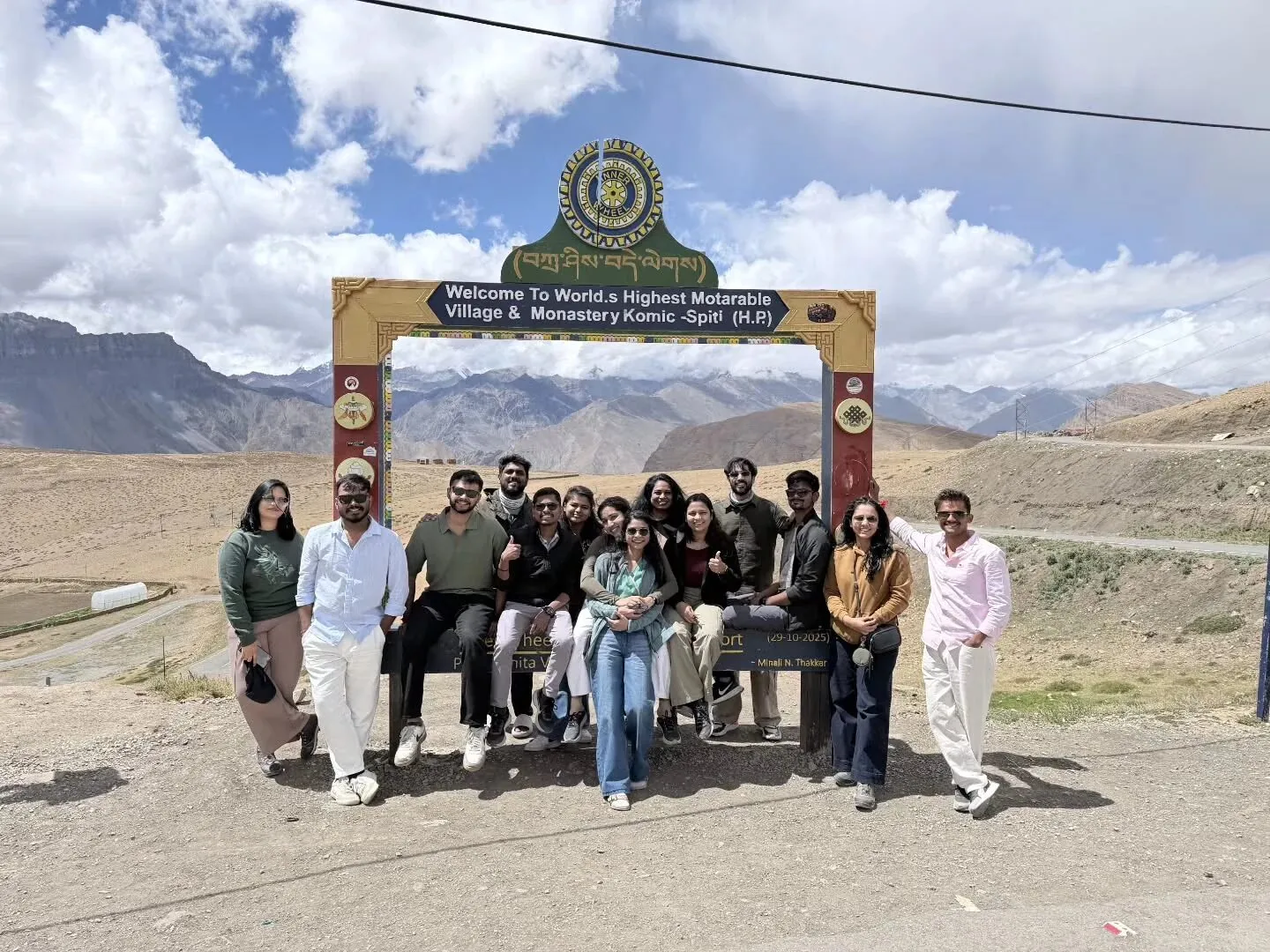
Quick answer
- Best base: Kaza (most choice, shops, fuel, mobile network)
- Best views: Langza, Komic and Hikkim, villages above 4,300 m
- For wildlife and quiet: Kibber
- On the Kinnaur route: Nako and Tabo
- Price: about ₹1,200–2,500 per person per night, usually with breakfast and dinner
- Winter: fewer homestays open; expect bucket hot water and dry toilets
- Last checked: November 2026
The best way to experience Spiti is to sleep in a village home: butter tea in the kitchen, a family that knows every peak by name, and a sky full of stars outside the door. Spiti has a few hotels in Kaza, but homestays are the heart of the valley. Here is where to stay, what it costs and how to pick a good one, based on the villages our groups stay in every year.
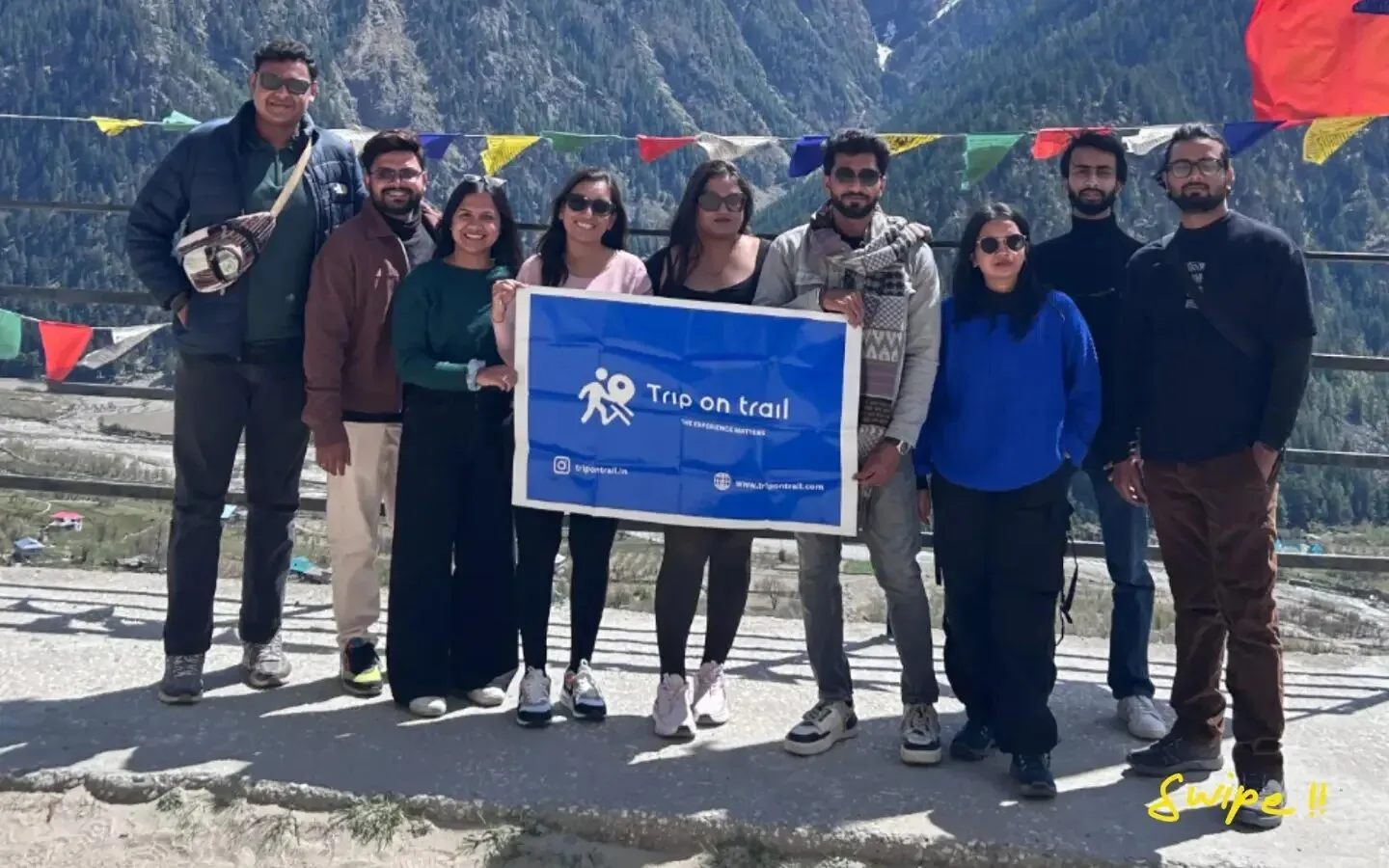 One of our groups in Spiti Valley.
Where to stay in Spiti: village by village
| Village | Altitude | Best for | Mobile network | Open in winter? |
|---|---|---|---|---|
| Kaza | about 3,800 m | First and last nights, comfort, shops | Good (BSNL, Jio, Airtel patchy) | Some homestays |
| Langza | about 4,400 m | The Buddha statue, fossils, stargazing | Weak | A few |
| Komic | about 4,500 m | One of the highest villages with road access | Very weak | Very few |
| Hikkim | about 4,400 m | The high-altitude post office | Very weak | Very few |
| Kibber | about 4,200 m | Quiet, wildlife, snow leopard tracking in winter | Weak | Yes |
| Tabo | about 3,280 m | The ancient monastery, an easier first night in Spiti | Moderate | Yes |
| Nako (Kinnaur) | about 3,600 m | The lake and an acclimatisation stop | Moderate | Yes |
| Dhankar | about 3,900 m | Cliff-top monastery and Dhankar Lake hike | Weak | A few |
| Mud (Pin Valley) | about 3,800 m | Pin Valley National Park, the Pin–Bhaba trek | Weak | Rarely |
Acclimatisation tip: sleep lower first. Spend your first night in Nako or Tabo, then Kaza, and only then move up to Langza, Komic or Kibber.
Kaza: the practical base
Kaza is the valley’s town, with the most homestays, a few hotels, cafes, a market, a petrol pump and the only real mobile coverage. It is the easiest place for your first and last nights. Stay in the older part of Kaza or on its edges for a quieter, homestay feel.
Langza, Komic and Hikkim: the high villages
These three villages sit on a high plateau about 30–45 minutes above Kaza. They are why people come to Spiti: wide views of Chau Chau Kang Nilda, fossils in the fields at Langza, and night skies so dark that the Milky Way casts shadows. Homestays here are simpler, and the altitude is noticeably higher, so stay here only after a night or two in Kaza.
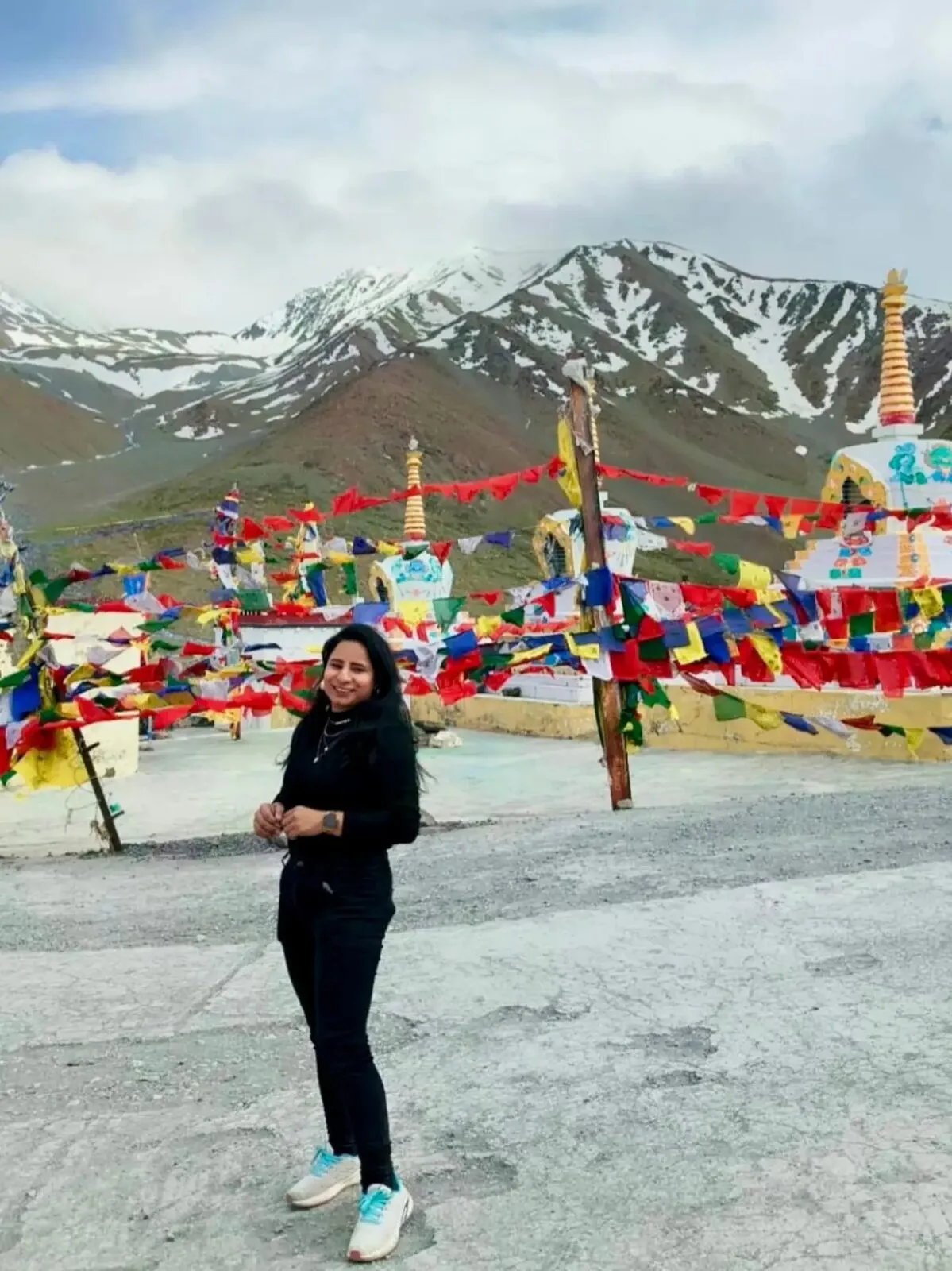 Prayer flags and snow peaks in Spiti.
Kibber: quiet and wild
Kibber is a stone village on a ridge above Key Monastery, close to the Kibber Wildlife Sanctuary. In summer it is calm and green; from January to March it is the base for snow leopard tracking with local spotters. Homestays here are often run by families involved in conservation and wildlife tourism.
Tabo and Nako: on the way in
If you come in through Kinnaur, Nako and Tabo are the natural first stops. They are lower than Kaza, so they help you acclimatise. Tabo’s mud-walled monastery, more than 1,000 years old, is worth an unhurried morning.
How much do homestays in Spiti cost?
| Type | Typical price (2026) | What you usually get |
|---|---|---|
| Basic village homestay | ₹1,200–1,800 per person per night | Shared room, quilts, breakfast and dinner, shared toilet |
| Comfortable homestay (Kaza, Tabo) | ₹1,800–2,500 per person per night | Private room, attached bathroom, hot water, meals |
| Small hotel in Kaza | ₹2,500–5,000 per room per night | Private bathroom, sometimes room heaters |
| Winter homestay with heating | ₹1,500–2,500 per person per night | Bukhari-heated common room, meals; prices include fuel |
Most homestays charge per person including breakfast and dinner (called MAP). Lunch is usually extra, or packed for the road on request.
Summer vs winter stays
Summer (May to October)
- Most homestays are open, and rooms are easy to find outside peak weeks
- Running water and attached bathrooms are common in Kaza and Tabo
- Book ahead for July, August and long weekends
Winter (December to February)
- Only some families keep their homestays open
- Pipes freeze: expect bucket hot water and dry compost toilets
- Everyone gathers around the bukhari in the evening; it is the warmest, friendliest part of the trip
- Read our Spiti in winter guide before you go
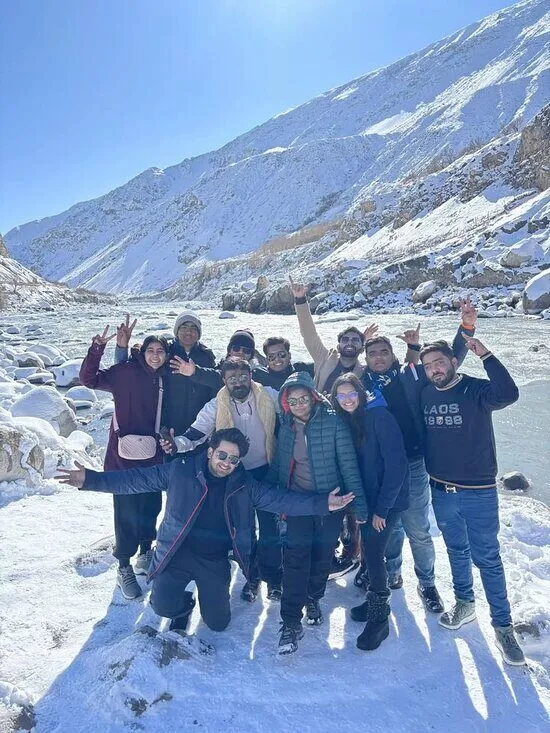 A Trip On Trail winter group in Spiti.
How to choose a good homestay
- Ask about the toilet and water before you confirm. Attached bathroom, shared bathroom or dry toilet?
- Ask about heating, especially from October to April: a bukhari in the common room, electric heaters, or extra quilts?
- Confirm what meals are included and whether they can cook vegetarian or Jain food.
- Check the location. In Kaza, some homestays are a steep walk from where a car can stop.
- Prefer family-run stays. The money stays in the village, and the experience is better.
- Pay part in advance, the rest in cash. Card machines and UPI do not always work in the high villages.
Homestay etiquette in Spiti
- Remove your shoes before entering the kitchen and prayer room.
- Ask before photographing people, especially inside homes and monasteries.
- Walk clockwise around chortens and mani walls.
- Save water. Water is scarce and often carried by hand in the high villages.
- Carry your plastic out. Spiti has very limited waste processing.
Frequently asked questions
Which is the best place to stay in Spiti?
Kaza is the most practical base. For views and a village experience, add a night in Langza or Komic after acclimatising, or in Kibber for quiet and wildlife.
How much does a homestay in Spiti cost?
About ₹1,200–2,500 per person per night, usually including breakfast and dinner.
Are homestays in Spiti open in winter?
Some are, especially in Kaza, Kibber, Tabo and Nako. Expect bucket hot water, dry toilets and a bukhari-heated common room.
Is it safe to sleep in Komic or Langza on the first night?
It is better not to. These villages are above 4,300 m. Spend at least one night lower, in Tabo, Nako or Kaza, first.
Do Spiti homestays have Wi-Fi?
Some in Kaza do, but connections are slow. In the high villages, assume you will be offline.
Plan your Spiti trip
- Spiti Valley in winter: route, cold and a 7-day plan
- Manali in December
- Want a Spiti trip with handpicked homestays? Browse our listings or send us an enquiry.